Survival Case
Overview
This project focused on designing, modeling, and prototyping a multifunctional phone case that integrates lightweight survival tools to enhance everyday safety.
Target Audience
Individuals who regularly carry personal safety or survival tools and want a more compact, convenient alternative.
Problem Statement
Traditional safety tools are often bulky, heavy, and difficult to carry or maneuver in daily life. Users need a portable system that integrates seamlessly into objects they already bring everywhere.
Design Process
1. Defining the Problem Space
How might we improve daily safety with a portable, always-accessible tool system?
We identified the phone as the most consistently carried item and explored embedding essential survival tools directly into a phone case.
2. Concept Development & Iterative Prototyping
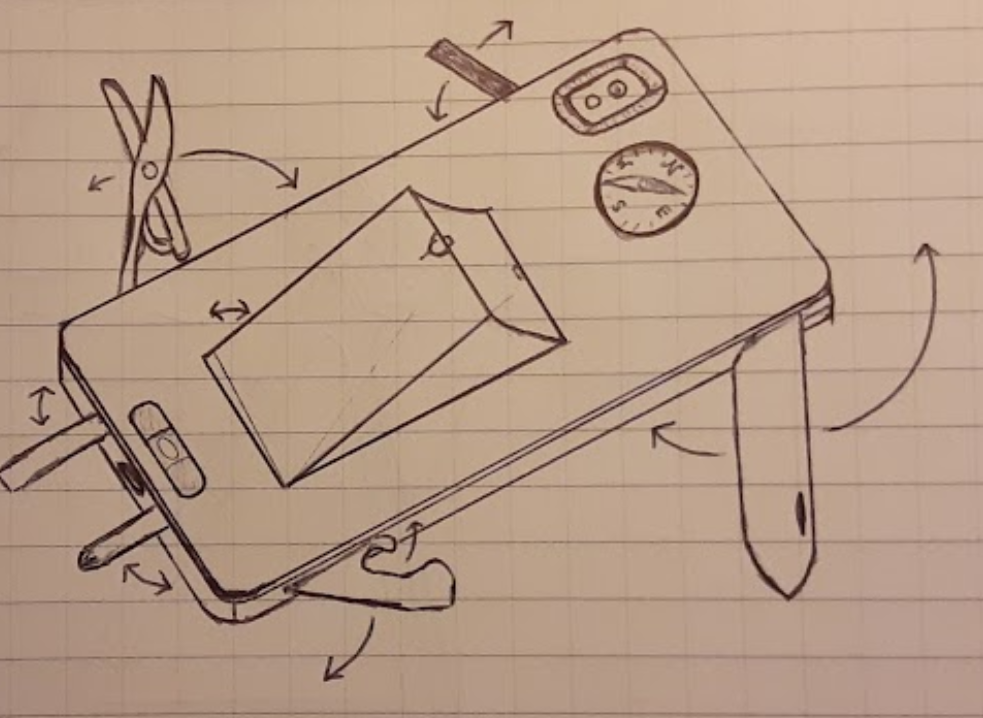
We sketched design directions and built multiple prototypes exploring material choices, access mechanisms, and tool layout.
Finalized Architecture:
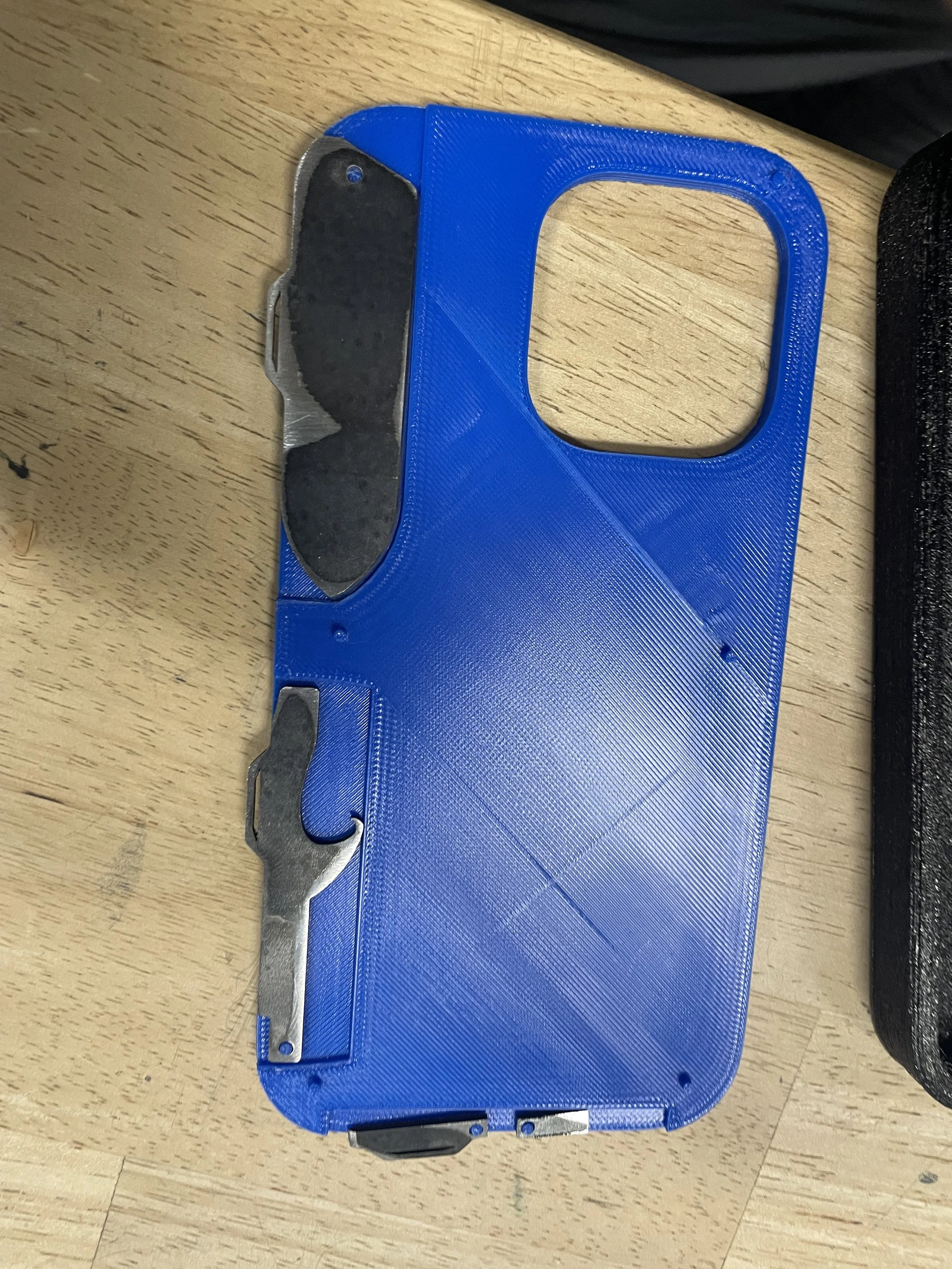
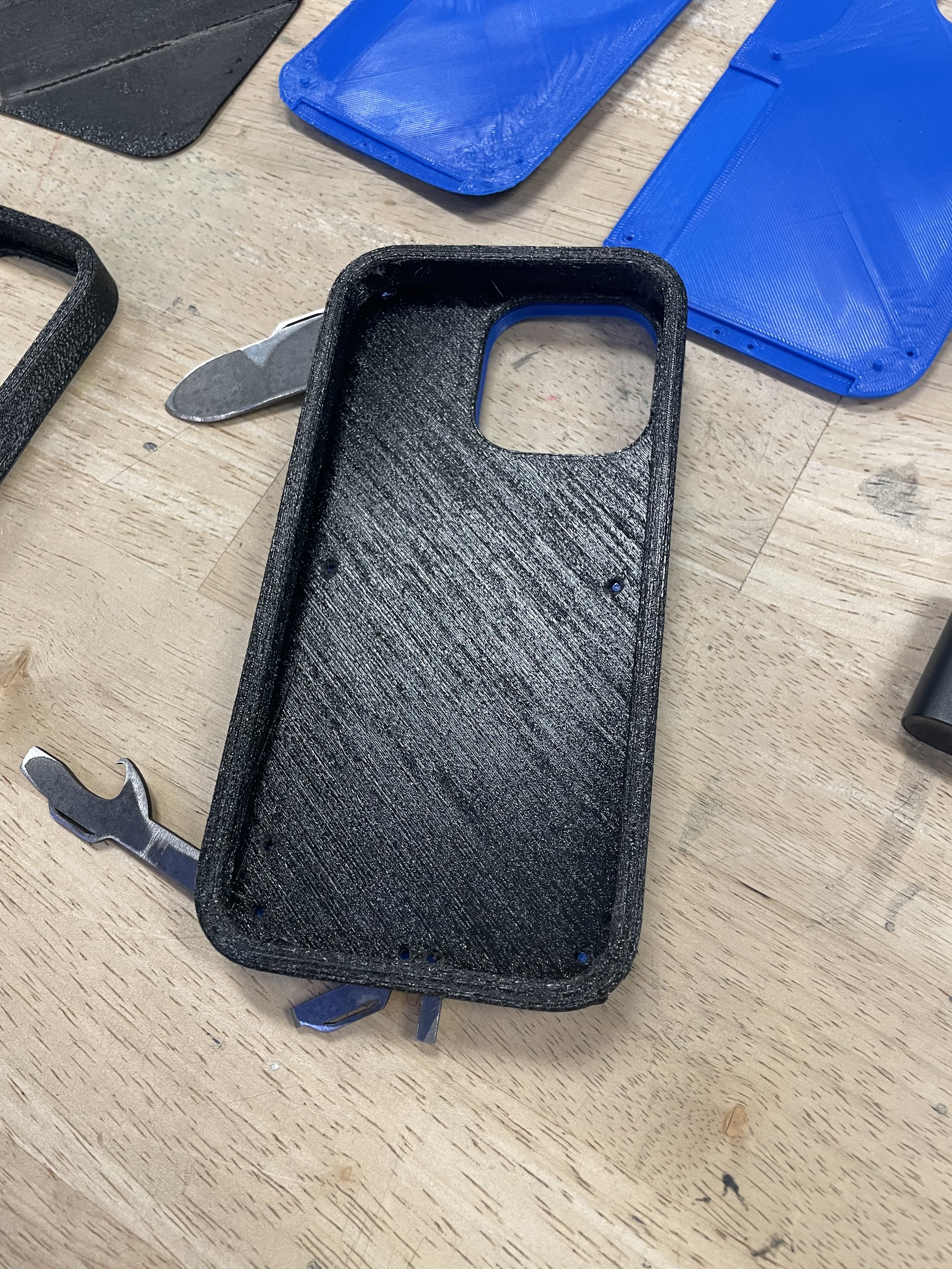
Layer 1: PLA structural backing with integrated pins for rotating tools.
Layer 2: TPU outer case that snaps into Layer 1 and forms the user-facing interface.
Tools: Laser-cut components including a small knife, bottle/can opener, and fire starter.
Material + Mechanism Experiments:
Materials tested: PLA, TPU, dual-material combinations, silicone molds.
Access methods tested: interference fits, removable TPU backing, snap-fit systems.
3. User Testing & Refinement
We conducted interviews with student users who highlighted key issues: early prototypes were overly bulky, heavy, and difficult to fit into pockets.
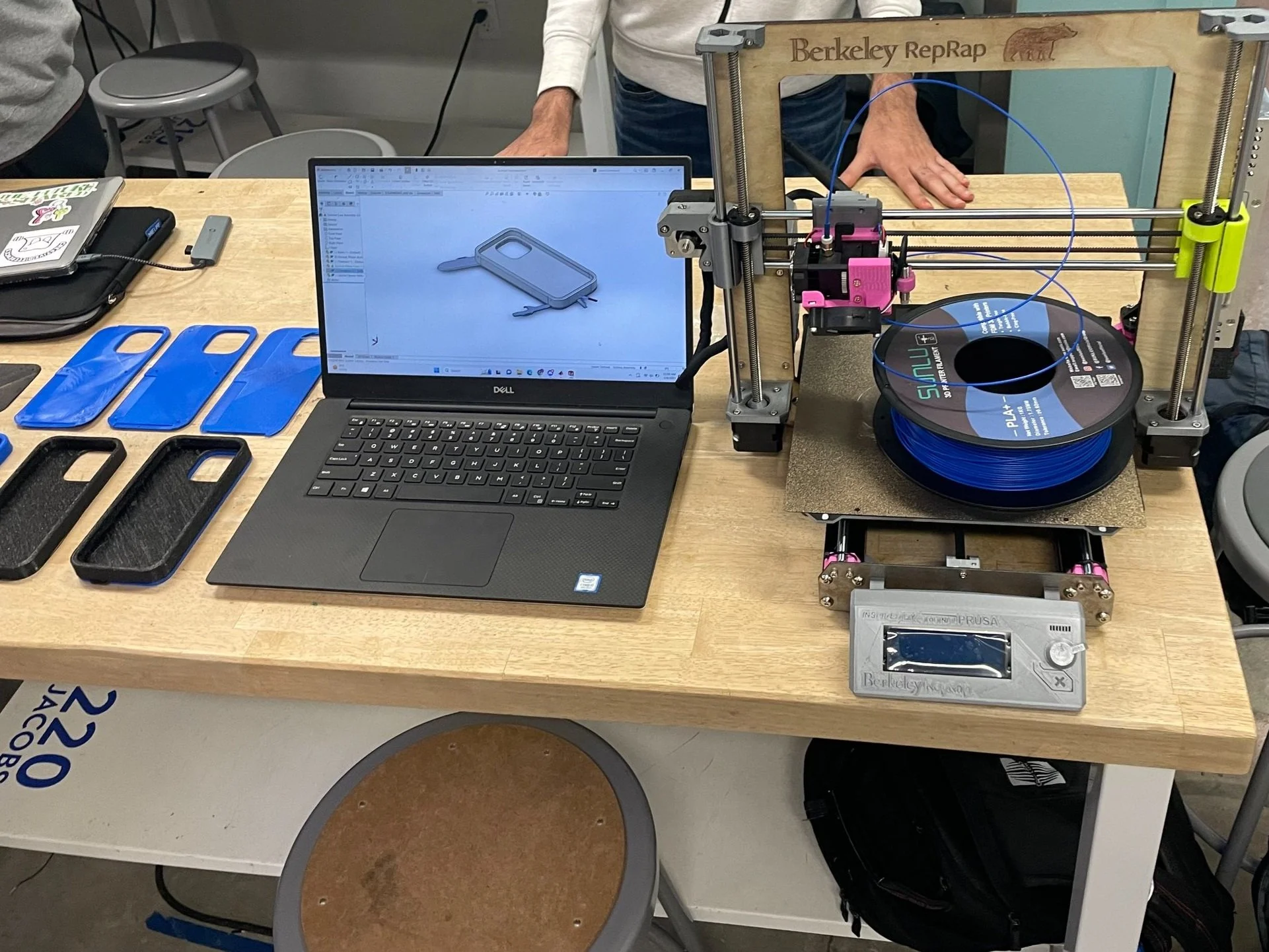
Using this feedback, we redesigned the internal structure, removed unnecessary material, and produced a final 3D-printed prototype that was significantly slimmer and more comfortable to carry.